The Unwanted Welcome: Which Developed Nations' Tourists Are Most Rejected by the USA in 2025
When historians examine the Trump administration's policies in 2025, one narrative will stand out as particularly ironic: the United States actively discouraged visitors from its closest economic and cultural allies while attempting to protect itself from external threats.
The data reveals a stunning reality, the "most unwanted" tourists in the USA today aren't from developing nations or countries on travel ban lists. They're from the world's wealthiest, most developed democracies.
This blog examines the data behind which developed nation tourists face the greatest barriers to entering the United States, why they're being discouraged, and what this means for American tourism and global relationships.
The Data: Which Developed Nations' Tourists Are Least Welcome
The answer varies depending on the metric you examine. But three nations stand out starkly: Canada, the United Kingdom, and Australia. Each faces distinct but mutually reinforcing barriers to US travel in 2025.
Canada: The Shocking Boycott from America's Closest Neighbor
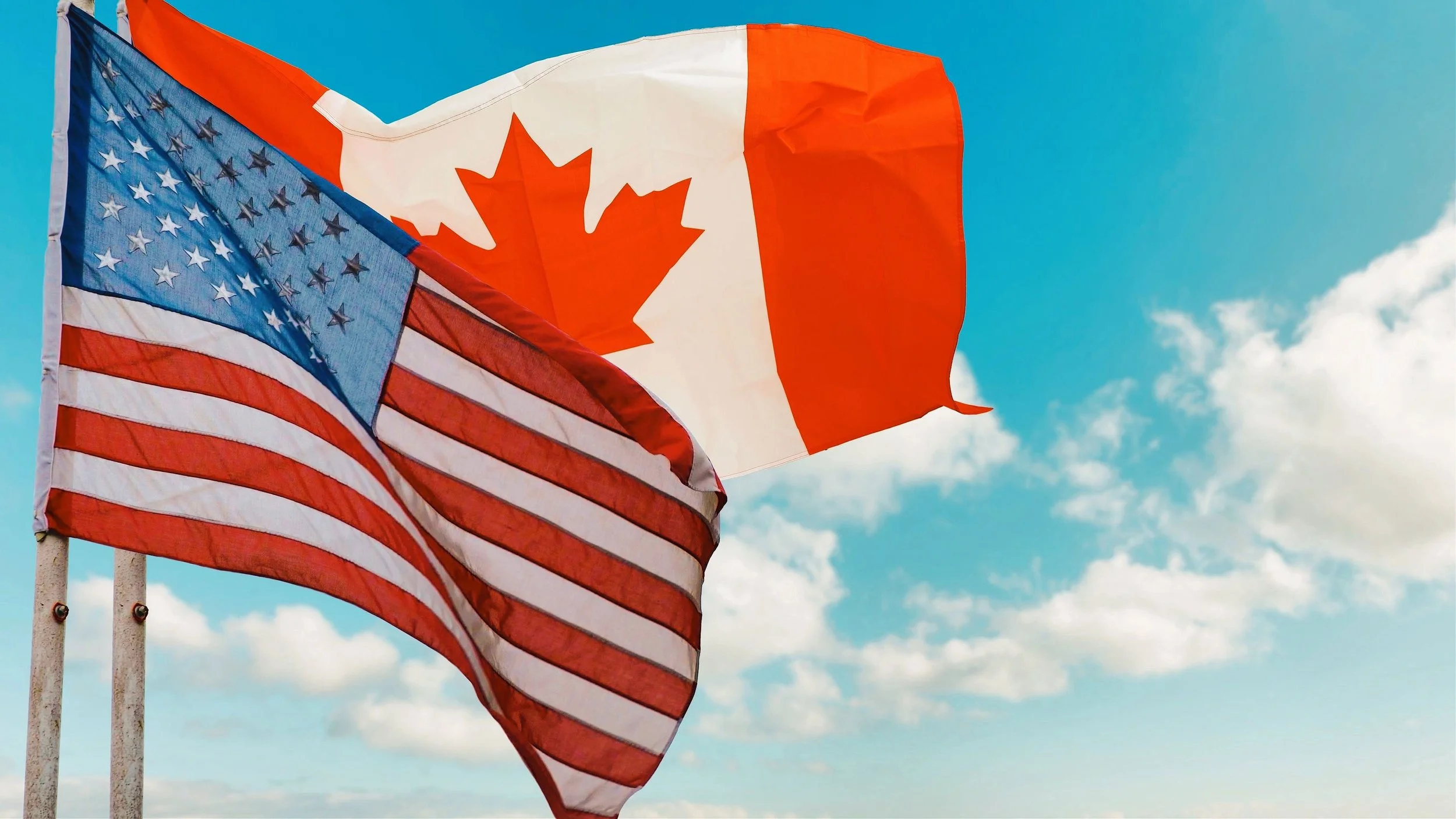
If there's a poster child for the "most unwanted" developed nation tourists, it's Canada and the irony cuts deep. Canadians aren't facing formal travel restrictions. Rather, they're engaged in a widespread, politically motivated boycott of the United States, driven by Trump administration policies and statements.
The Scale of the Exodus:
Canada made 20.4 million visits to the United States in 2024, spending USD$20.5 billion. Canadians account for approximately 25% of all international visitors to the US.
In 2025, the numbers collapsed:
Air arrivals from Canada fell 26% in July 2025 alone. For the first six months of 2025, Canadian travel to the US was down 24% overall. Land border crossings declined 19% in the first ten months of 2025, with some states seeing declines as large as 27%.
The Economic Damage:
One percent of lost international travel spending costs the US economy USD$1.8 billion in export revenue. The current Canadian decline is projected to cost the US tourism sector USD$5.7 billion in 2025 alone. When combined with broader international travel declines, Tourism Economics forecasts a USD$12.5 billion loss in 2025 tourism revenue for the entire United States.
The Boycott is Conscious and Political:
This isn't passive disinterest. This is active rejection. A mid-May 2025 poll by Leger found 56% of Canadians who had planned US trips changed their plans due to the political climate. By October 2025, an Angus Reid poll found 70% of Canadians said they would be uncomfortable travelling to the US in winter.
In one survey by Approach Tours, three-quarters of Canadians ages 55 and up, typically the highest-spending demographic for US snowbird tourism, said they're avoiding trips to the US more than before.
Prime Minister Justin Trudeau called on Canadians to "choose Canadian products and services rather than American ones" in February 2025. Foreign Minister Mélanie Joly suggested Canadians cancel or avoid travel to the US. This is unprecedented: an allied nation's leadership actively discouraging travel to America.
Why the Boycott:
Trump's rhetoric about Canada becoming the "51st state," combined with massive tariff threats and trade war tactics, triggered the response. But border experience matters too. Canadians report longer wait times, increased interrogation, device searches, and a perception that the Trump administration views them with suspicion.
The $30 registration fee (USD) for anyone staying longer than 29 days, combined with fingerprinting and photography requirements, has compounded the perception of unwelcomingness.
State Level Impact: https://www.cbc.ca/news/politics/canada-united-states-tourism-boycott-9.7012575
Montana: Canadians account for nearly 80% of international visitors. Border crossings fell 19% in the first ten months of 2025. Spring saw a 25% decrease in Canadian travel and a 44% drop in Canadian credit card spending compared with 2024. One hotel reported USD$38,000 in losses after a Canadian sports team cancelled its reservation (70 rooms and a 200-person dinner).
New Hampshire: A 30% decrease in Canadian visitors. State run campground reservations dropped 71% in the first five months of 2025.
Maine: Old Orchard Beach reported a 50% drop in Canadian visitors in 2025. One business owner said it was "the worst year we've ever had, even worse than COVID."
Florida: Canadians typically spend USD$300 million annually in Palm Springs alone. In the first quarter of 2025, visitor numbers from Canada plummeted 20% year over year. In Q2, the decline was 17%.
The United Kingdom: Anxiety, Detention, and Calculated Avoidance
British tourists haven't fully boycotted the US like Canadians, but they're voting with their feet. The situation is more subtle but no less telling.
The Shift:
A Holiday Extras survey found that 17% of British travelers have pledged to avoid the United States in 2025. This marks the first time an overseas election has significantly influenced British travel preferences, comparable only to the impact of Middle East conflicts and the Ukraine invasion.
Tourism from Europe, particularly the UK, has declined by an estimated 9% for 2025.
Why the Reluctance:
Heightened scrutiny at US borders. British travelers report detention for minor visa violations. In one notable case, UK punk band UK Subs was detained at LAX and sent back to the UK. A British traveler was detained for over ten days for a potential visa violation.
These aren't isolated incidents. They signal a pattern: the Trump administration is applying stricter entry standards even to travelers from longtime allies.
The Message Matters:
British officials have raised concerns that such stringent actions are unnecessary among allies and represent a departure from America's historical image. The cumulative effect: uncertainty and anxiety. British travelers are choosing certainty (Europe, Canada for leisure travel) over the US.
https://www.visaverge.com/news/trumps-immigration-rules-leave-british-tourists-facing-new-hurdles/
Australia, Japan, South Korea: The Surveillance Problem
While Australia, Japan, and South Korea haven't seen the same dramatic drops as Canada or Britain, they face a unique barrier: the proposed mandatory social media vetting regime.
The New Policy:
Starting with the ESTA (Electronic System for Travel Authorization) application, visitors from 42 countries including Australia, Japan, South Korea, Germany, France, Israel, and New Zealand will be required to provide five years of social media history. They'll also submit ten years of email addresses, five years of phone numbers, addresses of immediate family members, and metadata from photos.
The Concern:
This policy creates a privacy barrier particularly acute in cultures that value data protection. For Japan, a nation with strict data privacy regulations and cultural concerns about surveillance, this represents a fundamental shift in how the US approaches trusted allies.
The requirement also raises practical questions: What counts as "hostile attitudes" or "antisemitic" content? Which content flags do officers use? How is this data stored and protected?
The Economic Signal:
The U.S. Travel Association has warned that this policy will dissuade high-spending international travelers. Visitors entering through the Visa Waiver Program typically represent some of the wealthiest demographics in global travel markets. Making their entry contingent on surveillance of five years of personal social media activity sends a clear message: you're not trusted, even though you're from a developed, allied nation.
https://www.travelandtourworld.com/news/article/japan-joins-south-korea-australia-and-other-visa-waiver-program-nations-in-being-deterred-from-visiting-u-s-due-to-new-social-media-requirements-that-could-harm-the-travel-industry/
The Stark Statistics: Overall Developed Nation Decline

Beyond country-specific data, the broader story is clear:
Global Forecast: Before Trump took office, analysts expected 79 million foreign visitors to the US in 2025. Tourism Economics has now scaled that forecast back to 66 million, a loss of 13 million visitors annually.
Revenue Impact: Spending by overseas visitors in 2025 will fall 7%, to less than USD$169 billion, according to the World Travel and Tourism Council.
Historic Anomaly: Of the 184 economies the WTTC tracks, the US is the only one expected to see tourism revenue decline this year.
Airline Response: Air France, British Airways, and Lufthansa are all cutting flights to destinations such as Atlanta, Las Vegas, Miami, and New York.
The Visa Integrity Fee Impact: The new USD$250 visa integrity fee (effective October 1, 2025) further discourages visitors. For a B-2 tourist visa, costs jumped from USD$185 to USD$435 (over AUD$700), on top of airfare and accommodation costs.
Source: https://www.bloomberg.com/graphics/2025-trump-toll-on-global-travel/
Why This Matters: The Paradox of the "Most Unwanted"
Here's the central paradox: The US government is making it less welcoming to visitors from developed, wealthy, stable democracies, precisely the tourists who spend the most money, pose the least risk, and have the most alternatives.
A Canadian tourist choosing Mexico instead of Miami. A British family opting for Europe. An Australian bypassing Hawaii for Southeast Asia. These aren't forced relocations. They're rational economic choices by travelers who have options.
For Border States: Montana, Maine, New Hampshire, and Florida aren't suffering from restrictions on "high risk" travelers. They're suffering because wealthy, friendly neighbors have chosen to spend their vacation dollars elsewhere.
For the Tourism Industry: The cumulative impact is staggering. Hotels, attractions, airlines, and restaurants don't distinguish between "good" and "bad" travel declines. Revenue is revenue.
For US Soft Power: When even your closest ally (Canada) is encouraging its citizens to avoid you, and longtime cultural partners (UK, Australia) are anxious about visiting, something has shifted in how America is perceived globally.
The Data on Border Rejections and Visa Denials
While comprehensive data on all developed nations' specific visa denial rates isn't uniformly available, the State Department provides some relevant statistics:
Visa Waiver Program Adjusted Refusal Rates (B-visas): Countries in the visa waiver program have lower rates than non-waiver countries, precisely because they're typically allies. However, the Trump administration's new policies increase scrutiny even for waiver program visitors.
ESTA Denials: Hard data on ESTA denials by nationality isn't publicly released in the same way as visa statistics, but anecdotal reports suggest increased denials and delays, particularly for applicants flagged during social media screening.
Student Visas: For F-1 and J-visa holders from developed nations, new guidelines allow rejection based on "hostile attitudes towards our citizens, culture, government, institutions, or founding principles." This represents a significant departure from previous standards and creates uncertainty even for wealthy, educated travelers.
Link to official State Department data: https://travel.state.gov/content/travel/en/legal/visa-law0/visa-statistics/nonimmigrant-visa-statistics/nonimmigrant-b-visa-adjusted-refusal-rates-by-nationality.html
The Messaging: How the US Got Here
The US didn't arrive at this point through accidental policy. Rather, through a series of deliberate choices:
June 2025: Trump administration announces travel restrictions affecting 19 countries, claiming security concerns.
October 2025: USD$250 "visa integrity fee" takes effect.
November 2025: Trump announces "permanent pause" on immigration from "Third World countries."
December 2025: Travel ban expands to 39 countries. Social media vetting proposal announced for visa waiver program visitors. Travel ban restrictions expand further.
Each policy was framed in security terms. But the cumulative effect is clear: the US has signaled that it doesn't particularly want international visitors, regardless of their origin. The difference is that wealthy allies can simply choose not to come, while poorer nations have less choice.
Link to travel ban information: https://www.cfr.org/article/guide-countries-trumps-2025-travel-ban-list
What Other Developed Nations Are Doing in Response
As the US makes travel more difficult, competing destinations are responding:
Canada: Launching "Buy Canadian" campaigns and pushing citizens toward domestic tourism.
Mexico: Positioning itself as the warm weather alternative to Florida and the Southwest.
Japan: Continuing to offer visa free entry and streamlined processes to international visitors.
Thailand: Offering visa free entry to numerous countries and actively marketing to tourists displaced from other destinations.
New Zealand: Emphasizing its perceived political stability and welcoming attitude toward international visitors.
The EU: Germany, France, Spain and other European nations offer easier visa processes and are actively courting tourists avoiding the US.
The Tourism Industry Response
The US Travel Association has been vocal in its criticism. In June 2025, the association described the visa integrity fee as a "self imposed tariff" that "could hinder the country's ability to attract international visitors and hurt the tourism industry."
Airbnb, Booking.com, and Expedia have all cautioned that their financial results will be weaker than expected because of softening demand for US travel.
State tourism boards in border regions have launched campaigns offering discounts and special offers to try to woo back Canadian visitors. Some states, like California, have launched specific campaigns targeting Canadians. Palm Springs put up signs reading "Palm Springs Loves Canada."
These aren't long-term solutions to systemic policy problems.
https://www.ustravel.org/
The Historical Context: Why This Is Unprecedented
Never before in the modern era has the United States actively discouraged wealthy, developed nation tourists from visiting. During previous recessions, economic downturns, or political tensions, tourism has declined. But those were reactive responses to external circumstances.
This situation is different. The US government is proactively implementing policies that discourage visits from precisely the tourists most valuable to the economy: wealthy, English speaking, low-security-risk travelers from developed democracies.
The Canadian boycott is particularly unprecedented. A neighboring developed nation, where citizens have cultural ties and travel history, actively calling on citizens to avoid the US. This hasn't happened before in modern times.
What Tourism Operators and Destinations Can Learn
Lesson 1: Policy Uncertainty Destroys Tourism Revenue
When governments signal that they don't particularly want visitors through fees, surveillance requirements, detention, or hostile political rhetoric, wealthy travelers with options simply go elsewhere. This applies globally. No destination is immune to this dynamic.
Lesson 2: Developed Nation Tourists Are the Most Valuable and Most Elastic
Wealthy travelers from developed nations have the most vacation options. They can afford to change plans, take longer trips to distant destinations, or cancel altogether. When you lose them, you lose high-value tourism revenue.
Poorer travelers, by contrast, often have one or two destination options they can afford. They're more likely to persist despite barriers. But developed nations target wealthy tourists anyway, precisely because they spend more. This creates an inverted incentive: make the experience worse for the most valuable tourists.
Lesson 3: Soft Power Matters Economically
The US has historically exercised enormous soft power, cultural influence, perceived welcoming-ness, aspirational appeal. That soft power translated directly to tourism. When that soft power diminishes, tourism declines.
Countries that maintain positive international relationships, welcoming borders, and stable political environments will capture the tourism revenue that countries with hostile policies surrender.
Lesson 4: Surveillance and Data Collection Are Tourism Deterrents
For developed nation travelers, particularly those from countries with strong privacy regulations (Japan, Germany, Australia), requirements to disclose five years of social media history aren't seen as security measures. They're seen as invasive surveillance.
Tourism operators in competing destinations are already marketing the contrast: "Visit Japan, where your privacy is respected. Visit New Zealand, where you're welcomed, not surveilled."
Looking Forward: The Long-Term Economic Impact
If current trends persist, the US faces a sustained loss of high-value tourism revenue. Unlike policy that can be reversed quickly, tourism sentiment change is slow to rebuild. Even if Trump-era policies are reversed, the message has been sent: the US doesn't particularly want wealthy international visitors.
The industry consensus is that it will take years for tourism to recover to pre-2025 levels, even if policies change. Tourism economists point out that Canada's relationship with US travel is fundamentally altered. The political damage from Trump's rhetoric won't disappear when policies change.
For developed nations watching from the sidelines, the lesson is clear: invest in making your country more welcoming. Ease visa processes. Remove surveillance requirements. Welcome visitors from other wealthy nations. Position yourselves as alternatives for tourists who feel unwanted in the US.
The Bottom Line
When examining which developed nations' tourists are most unwanted in the USA in 2025, the answer isn't found in visa denial statistics or formal travel restrictions. It's found in behavior: Canadians consciously boycotting, British travelers anxiously avoiding, wealthy Australians and Japanese citizens hesitating due to surveillance concerns.
The United States has successfully signaled that it doesn't particularly want visitors from its closest developed nation allies. Those visitors, with abundant alternatives, have received the message and are acting accordingly.
The tourism industry impact will be substantial. But the soft power impact may be even more significant. When wealthy allies no longer see America as welcoming or trustworthy, the consequences ripple far beyond hotel occupancy rates.
For the first time in the modern era, wealthy developed nation travelers are the "most unwanted" tourists in the United States, not because of policy explicitly targeting them, but because of a broader political climate and deliberate policy choices that signal unwelcomingness.
The market has responded accordingly.
Ready to Adapt and Thrive in the Evolving Tourism Landscape?
At Exceptional Experiences, we specialize in helping tourism businesses respond to changing global trends. With new barriers and shifting preferences among key international markets, we’ll work with you to uncover new growth strategies, enhance your offerings, and create actionable plans based on current data and market dynamics.
👉 Book a Call with Sarah Colgate and discover how to turn today's challenges into opportunities for your business.
The Power of Storytelling: Using Disney’s Legacy to Attract and Retain Visitors
How to Turn Your Tourism Experience into a Must-Visit Destination